Water treatment
Best whole-house water filters, by problem
Updated Editor: Diego Ruiz
Kept & Sound earns a commission when you buy through links on this page. Commission does not change the order we rank products in.
A whole-house filter only helps if it matches what your water test shows. Below are four filters from iSpring and A. O. Smith, grouped by the problem each one is built for, plus a salt-free descaler for hard-water scale.
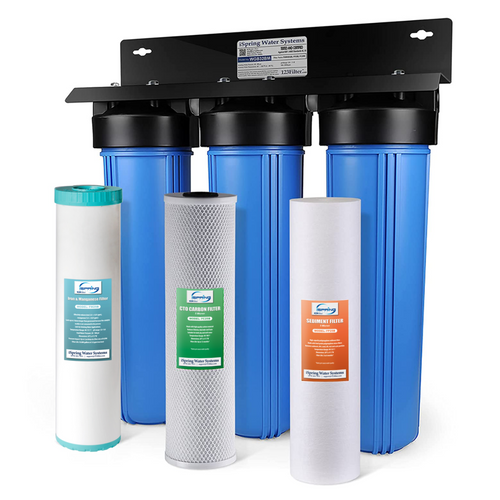
Best for iron and manganese
iSpring WGB32BM
iSpring
Best for: Homes with iron or manganese in the water supply
- Filters the whole house
- Easy to install
- Watch for: Rotten egg smell can remain
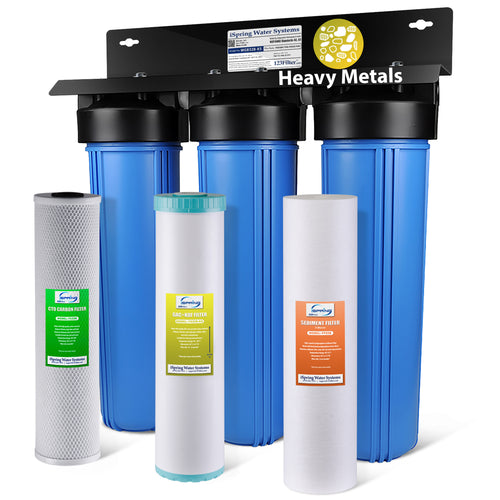
Best for heavy metals
iSpring WGB32B-KS
iSpring
Best for: Whole-house setups focused on heavy metals
- Easy to install
- Filters last for years
- Watch for: Hard to install for some
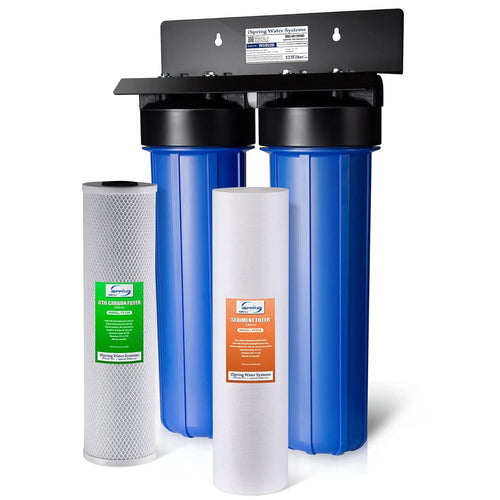
Best for city water
iSpring WGB22B
iSpring
Best for: City water homes that want chlorine and sediment out at every tap
- Replacement filters easy to find
- Easy to install
- Watch for: Leaks at connections, reported once
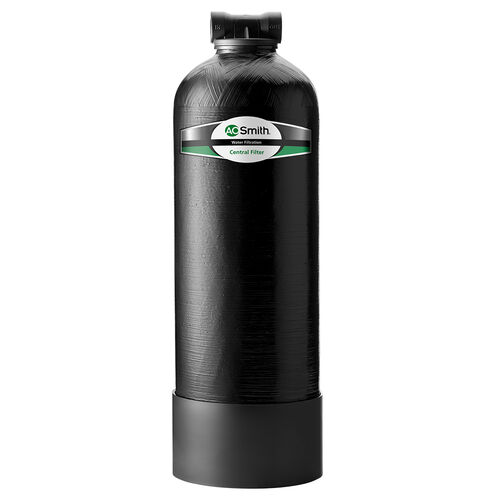
Longest filter life
A. O. Smith AO-WH-FILTER
A. O. Smith
Best for: City water homes that want a long-life chlorine filter
- Works as advertised
- Easy to install
- Watch for: Smell came back for some buyers
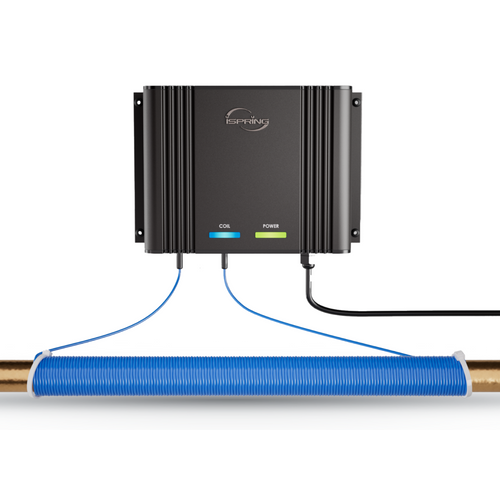
Salt-free scale add-on
iSpring EDV2 descaler
iSpring
Best for: Hard water homes that want a salt-free, no-plumbing option
- Easy to install
- No plumbing cuts
- Watch for: Some buyers see no change in scale (reported for the iSpring ED2000)
Side by side
| Spec | iSpring WGB32BM | iSpring WGB32B-KS | iSpring WGB22B | A. O. Smith AO-WH-FILTER | iSpring EDV2 descaler |
|---|---|---|---|---|---|
| Stages | 3: sediment, carbon block, iron and manganese | 3, with heavy metals stage | 2: sediment, coconut carbon block | Not listed | Not listed |
| Flow | Up to 15 gal/min | Up to 15 gal/min | Up to 15 gal/min | 7 gal/min rated | Not listed |
| Ports | 1 inch NPT | 1 inch NPT | 1 inch NPT | 3/4 inch NPT | Not listed |
| Iron rating | Up to 3 ppm iron, 1 ppm manganese | Not listed | Not listed | Not listed | Not listed |
| Filter life | About 12 months, less with heavy iron | About 12 months | Not listed | Not listed | Not listed |
| Targets | Not listed | Heavy metals, chlorine, sediment | Chlorine, sediment, taste and odor | Chlorine taste and odor | Not listed |
| Filter size | Not listed | Not listed | 20 x 4.5 in | Not listed | Not listed |
| Capacity | Not listed | Not listed | Not listed | 600,000 gal, up to 6 years | Not listed |
| Certification | Not listed | Not listed | Not listed | NSF/ANSI 42, chlorine taste and odor | Not listed |
| Warranty | Not listed | Not listed | Not listed | 6 years | Not listed |
| Type | Not listed | Not listed | Not listed | Not listed | Electronic, salt-free descaler |
| Power | Not listed | Not listed | Not listed | Not listed | 12 W |
| Install | Not listed | Not listed | Not listed | Not listed | Wraps around the pipe, no cutting |
| Pipe type | Not listed | Not listed | Not listed | Not listed | Works with any pipe type |
| Maintenance | Not listed | Not listed | Not listed | Not listed | None |
Start with a water test
Iron, heavy metals and hardness each need a different stage. Guessing wrong means paying for a filter that does nothing for the stain in your tub.
If you are on a private well, send a sample to a certified lab and ask for iron, manganese, hardness and metals. If you are on city water, your utility's yearly water quality report covers most of this. Keep the numbers next to you while you read the specs below.
How we judged them
We used spec sheets and a review-analysis tool run over verified buyer reviews. The tool groups reviews by topic and counts how many reviews raise each one. We call those counts mentions, and every pick here has few of them, so treat the themes as early signals.
The picks are ordered by the problem they solve. Iron comes first, then heavy metals, then chlorine on city water, where we ranked two filters against each other. Some links on this page are Levanta partner links and others are Amazon Associates links, and neither kind changes the order.
iSpring WGB32BM: best for iron and manganese
It runs up to 15 gallons per minute through sediment, a carbon block and an iron and manganese stage rated for up to 3 ppm iron and 1 ppm manganese. It is the only filter here with an iron stage, and it has a longer review record than the other two iSpring cartridge filters.
Its themes come from a small sample, about 20 praise mentions and 11 complaint mentions. Buyers like that it filters the whole house, that it was easy to install and that cartridge changes are simple. Several call the build solid, and few report leaks.
The complaints are specific. Some buyers still had a rotten egg smell after install. Others had trouble with replacement filters. A few found that heavy iron got through, and one canister leaked after years of use. Buyers also say the housings are heavy.
The rotten egg smell deserves a note. That smell usually comes from hydrogen sulfide, and the WGB32BM's listed rating covers iron and manganese only. If your water smells, test for sulfur first.
Skip it if your test shows more than 3 ppm iron or a strong sulfur smell.
iSpring WGB32B-KS: best for heavy metals
It keeps the same three-stage format, 15 gallons per minute and 1-inch ports, but swaps in a heavy metals stage aimed at metals, chlorine and sediment. Buyers rate it a touch higher than the WGB32BM, but on the smallest review record of the four filters.
The specs we found do not say what media the heavy metals stage uses. Compare the listing's performance data against the metals on your test.
Buyer topics are thin here too, about 28 praise mentions and 9 complaint mentions. Owners say it installs easily, feels heavy duty and works as described. Some say their filters have lasted for years, which is longer than iSpring's listed 12 months, so do not plan on that.
Some buyers found the install hard, and some say the unit is larger than they expected. Filter rust and a chlorine smell each came up once, and some buyers say their box had no instructions.
Skip it if iron staining is your main problem, since the WGB32BM is built for that.
iSpring WGB22B: best for city water
It is a two-stage system, a sediment filter followed by a coconut carbon block, rated up to 15 gallons per minute through 1-inch ports and aimed at chlorine, sediment, taste and odor. It ranks first of the two city water picks because buyers rate it higher, it has the lower price band, $270 to $290, and it has twice the rated flow.
Its reviews are pooled across WGB22B variants, and the analysis found only about 11 praise mentions and 4 complaint mentions. Owners mention replacement filters that are easy to find, an easy install and clean cartridge changes, and one notices less chlorine smell.
The 4 complaint mentions fall under three topics. One buyer reports leaks at the connections, and another says a cracked housing flooded a basement. Sources also disagree on cartridge life, from 3 to 6 months on one retailer page to about a year on others.
Skip it if your test shows iron or metals, since its two stages do not target them.
A. O. Smith AO-WH-FILTER: longest filter life
It is rated for 600,000 gallons or up to 6 years and carries NSF/ANSI 42 for chlorine taste and odor, with 3/4-inch ports. It ranks second for city water because buyers rate it lower and its rated flow of 7 gallons per minute is half the WGB22B's, even though its listing title says 14.
Its reviews are pooled across A. O. Smith's whole-house family, and the analysis found about 10 praise mentions and 6 complaint mentions. Owners say it works as advertised and installs easily, and one says it took the chlorine smell out of the shower. Another calls the price fair.
Smell is the main complaint theme. Some buyers say the smell came back, and one names sulfur, which its NSF 42 listing does not cover. A leak after a week, a filter that worked only a few months and a leak that was hard to trace each came up once.
Skip it if several bathrooms often run at once, since its rated flow is the lowest of the four filters.
iSpring EDV2 descaler: salt-free scale add-on
It is an electronic descaler that wraps around the pipe with no cutting, draws 12 watts and works with any pipe type. It does not filter or remove minerals, so it belongs next to a filter as a scale add-on, not in place of one.
The review picture is weak. The listing has the largest review record on this page, but the analysis of its own reviews found only 10 positive mentions and no complaint themes. Buyers like the easy install, the lack of plumbing cuts, the zero maintenance and the compact alloy box.
For complaints we used the analysis of its sibling model, the iSpring ED2000. There, some buyers see no change in scale, a few say it does not work, and some question the marketing claims. Expect results to be hard to measure.
Skip it if you need a hardness test to show lower numbers. A descaler is not built to do that.
How the filters compare
The WGB32BM and the WGB32B-KS share their core specs. Both have three stages, 15 gallon per minute flow, 1-inch NPT ports and about 12 months of cartridge life. The difference is the third stage, iron and manganese on one and heavy metals on the other.
The two city water picks split on flow and filter life. The WGB22B has the higher flow and the larger ports. The A. O. Smith goes far longer between changes and carries an NSF 42 listing.
If your test shows both iron and metals, start with the larger problem and ask the maker whether a second unit in series makes sense for your numbers.
What to check first
Stages come first. The iSpring filters each include a sediment stage, and the WGB32 units add one stage built for a specific job. Match that stage to your test. Sediment and carbon alone do not fix iron or metals.
Flow rate is the whole-house version of GPD. The three iSpring filters are rated for up to 15 gallons per minute and the A. O. Smith for 7. Federal rules cap new shower heads at 2.5 gallons per minute, so count the fixtures you run at once.
Port size sets the plumbing work. The iSpring filters use 1-inch NPT ports and the A. O. Smith uses 3/4-inch. If your main line is a different size, plan on adapters, and plan on a bypass valve so you can change cartridges without shutting off the house.
Drain and waste are simpler than with reverse osmosis. A cartridge filter has no drain line and sends no water away. If you also want RO-grade drinking water, put an under-sink system at the kitchen. Our best reverse osmosis systems under $400 page covers that.
Yearly filter cost is mostly cartridges. Plan on one full set a year for the WGB32 units, more often on the WGB32BM if your iron runs high. The A. O. Smith's 6-year rating spreads its cost thin, if your water lets it reach that.
Installation means cutting into the main supply line. WGB32BM buyers say the housings are heavy, and some WGB32B-KS buyers say the unit is bigger than expected. Measure the wall space and leave room under each housing to drop the cartridge.
Scale is a separate problem. None of the four filters lists hardness as a target. If scale on fixtures bothers you, the EDV2 is a no-cut add-on, but the evidence that it works is mixed.
Our verdict
Our pick: iSpring WGB32BM.
Best for: Homes with iron or manganese in the water supply.
See price on AmazonGet price drops by email
Price drops and new picks for water treatment, one email a month at most, reply stop to unsubscribe.
Questions people ask
- Do I need a whole-house filter on city water?
- Not always. City water is already treated, so the usual complaints are chlorine taste and smell. The WGB22B and the A. O. Smith both target chlorine, and the A. O. Smith carries NSF/ANSI 42 for chlorine taste and odor. Your utility's annual water quality report shows what else is in your supply.
- How often do whole-house filter cartridges need changing?
- iSpring lists about 12 months for the WGB32BM and the WGB32B-KS, and sooner on the WGB32BM with heavy iron. A. O. Smith rates its filter for 600,000 gallons or up to 6 years. Sources disagree on the WGB22B, so check its manual.
- Does an electronic water descaler actually work?
- Buyer reports are mixed. The EDV2's own reviews raise few topics, and on its sibling model some buyers see no change in scale and question the marketing claims. It does not remove minerals, so do not expect a hardness test to change.
- Can I install a whole-house filter myself?
- Many buyers do, and easy installation is a common praise for all four filters. You cut into the main line, add the housings and ideally a bypass valve. Some buyers found it hard and the housings heavy, so hire a plumber if you have never cut a supply line.
How we researched this
This roundup rests on manufacturer specs, certification listings and a tool-based analysis of verified buyer reviews. The analysis groups reviews by topic and counts how many raise each one, for praise and for complaints. We did not buy or test any of these units. Our rankings reflect what that evidence says, not hands-on trials.